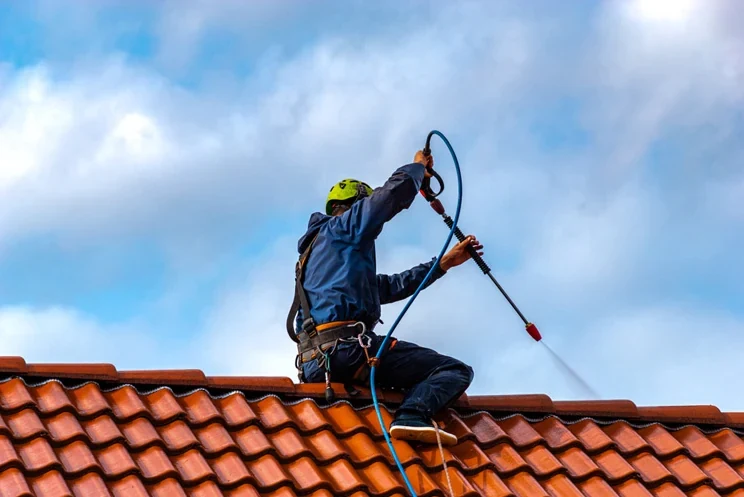
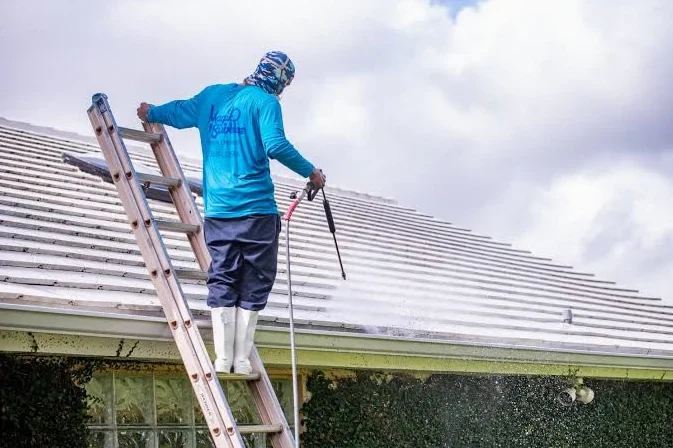
You are standing on a ladder with a wand in your hand
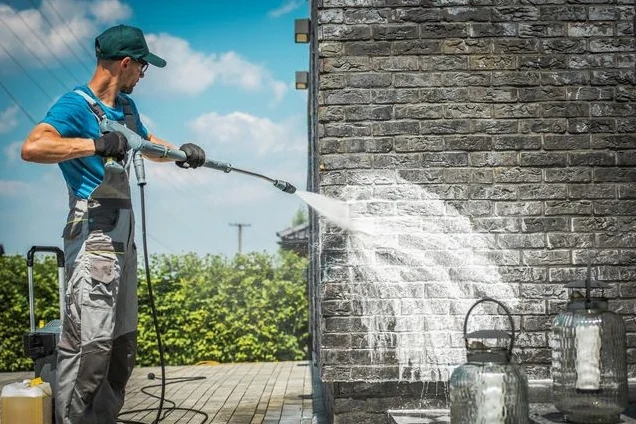
Soft wash your vinyl siding. Vinyl is a thin plastic skin over a foam or wood backing, and a pressure washer driven at full blast will force water behind it, dull the finish and, on older or loose panels, crack it. Low pressure with a cleaning solution does the same job without the damage.
That answer holds for the whole house, not just the sunny side. The green and black film on Jacksonville siding is algae and mildew feeding on moisture and pollen, and it dies from the chemistry, not from the force. Blasting it off the surface leaves the root behind and it comes back in a season.
- Short version: vinyl gets soft washing, meaning low pressure plus a cleaning mix, then a rinse.
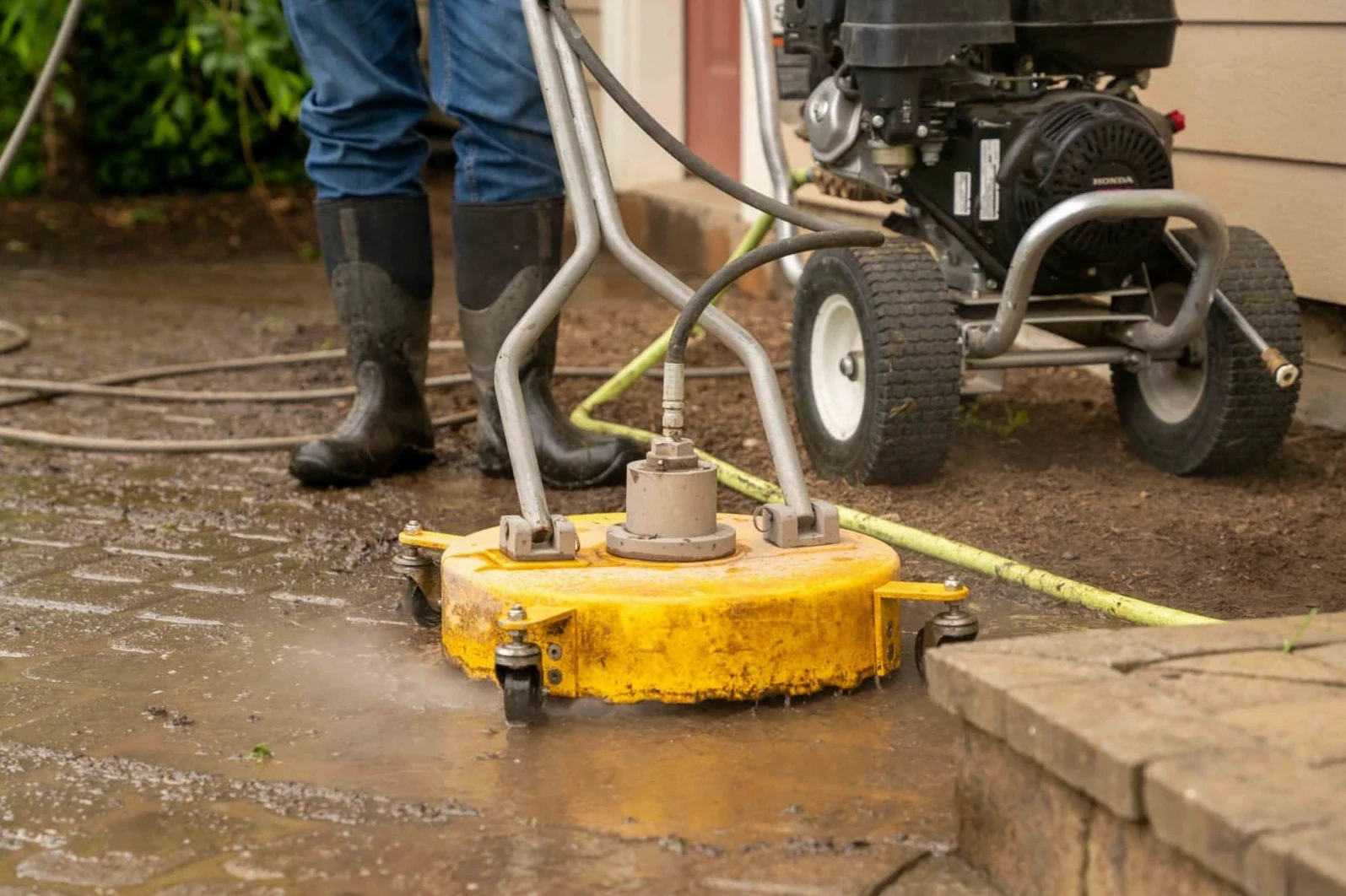
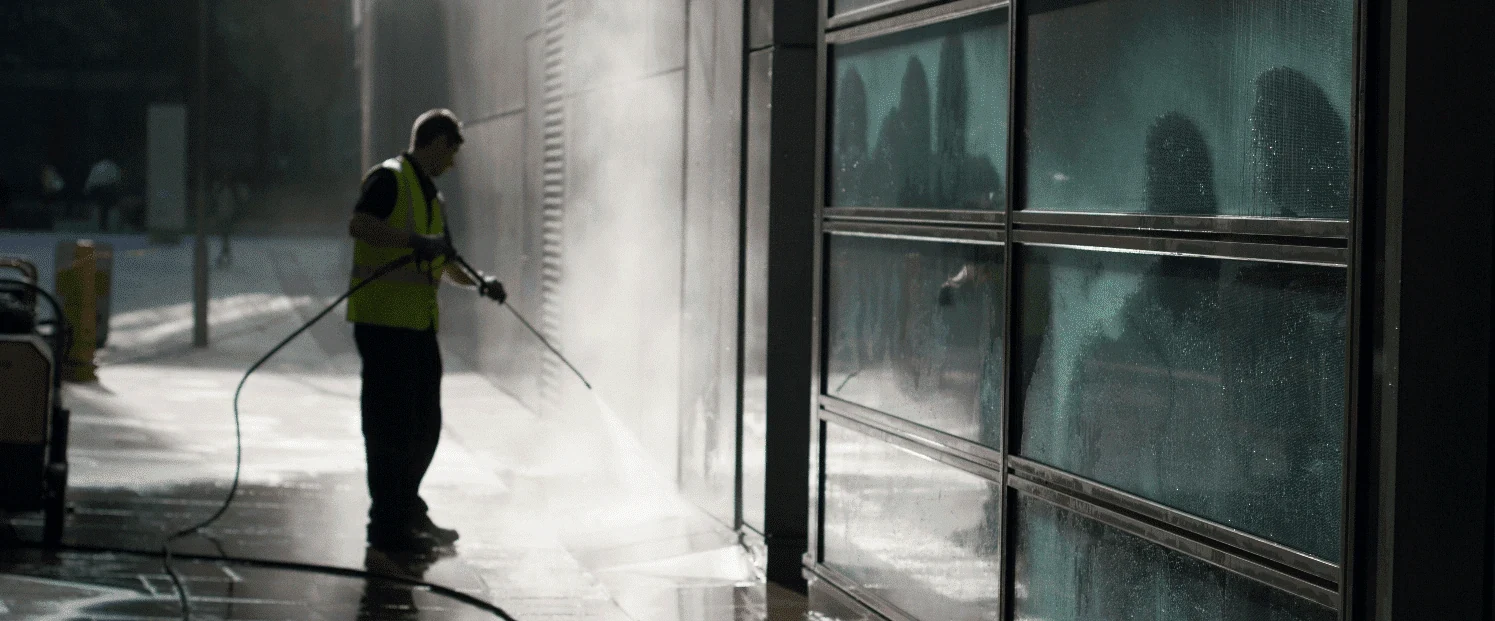
- Pressure washing at high psi belongs on concrete, brick and some hardscapes, not on siding panels.
- The test is simple: if the wand can lift a panel edge or peel paint, it is too much pressure for that wall.
- What matters more than the machine is the mix strength, the dwell time and the rinse.
What does pressure washing do to vinyl siding that soft washing does not?
High pressure forces water past the seams and behind the panels. Vinyl siding is hung loose on purpose, nailed in slotted holes so it can expand and contract with heat. That same looseness is a channel. Water pushed sideways at the lap joints gets behind the panel, sits against the sheathing and the house wrap, and has no fast way out.
On a Jacksonville wall that gets sun most of the afternoon, the damage shows up as chalky, faded panels and a finish that feels rough to the hand. The gloss goes first. Then the panel face can craze, especially on older siding that has spent a decade baking.
There is a second problem. High pressure etches the surface just enough to open tiny pores, and those pores hold dirt and algae better than the original smooth face did. A wall blasted clean in March can look worse by August than it did before anyone touched it.
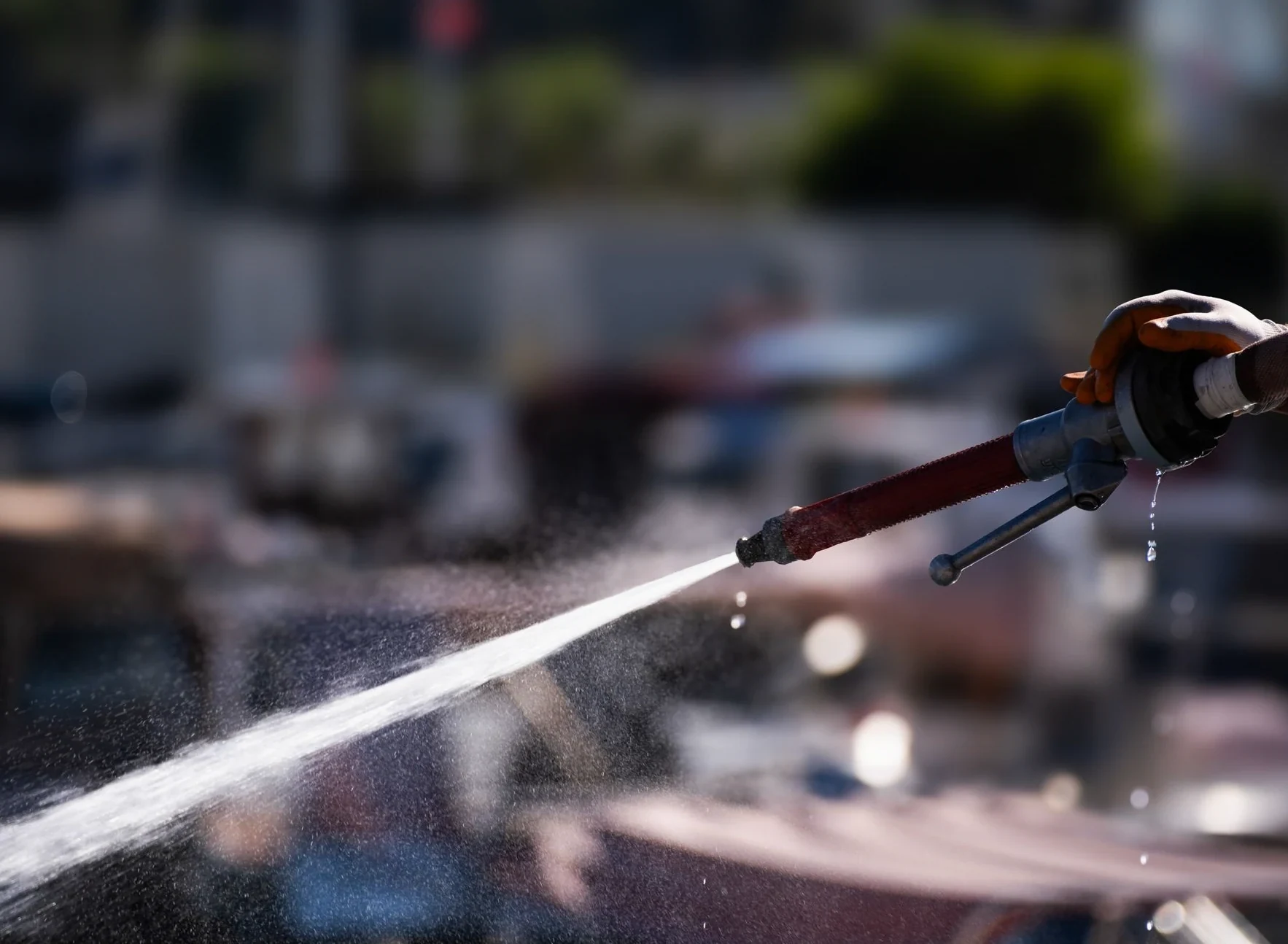
Soft washing works the other way. We apply a diluted cleaning mix at low pressure, let it sit long enough to kill the growth and break down the grime, then rinse at low pressure. The panels never see a jet strong enough to move them.
How do I know if my siding has already been damaged?
Look at the lap joints and the bottom edge of the lowest course. If water has been driven behind the panels, you will usually see it there first.
- Panels that flex or rattle when you press them, or that have popped loose from the nail slots.
- Chalky white residue that rubs off on your hand, which means the finish is breaking down.
- Faded or blotchy patches on one wall and not another, often the side that faces the weather.
- Staining or soft spots on the sheathing or trim visible under an eave or at a corner.
- Hairline cracks radiating from nail heads or from the corners of window openings.
- A dull, gritty feel across the whole face rather than a smooth one.
Any one of these is worth a closer look before another wash of any kind. A wall with loose panels needs those secured first, because even a low pressure rinse will find an open seam.
What does a soft wash involve, start to finish?
A soft wash is three steps: wet the wall with a cleaning mix, let it dwell, then rinse. The dwell is the part that does the work, and it is the part a rushed job cuts short.
Prepping the wall
We wet down plants and grass at the base, cover anything that should not get splashed, and close windows and doors. Downspouts get checked so the rinse water has somewhere to go.
Applying the mix
The solution goes on from the bottom up, at low pressure, so the wall is covered evenly and no band dries before the next pass. Strength depends on what is growing: light pollen film needs less than heavy green algae or black mildew on a north-facing wall.
Dwelling
The mix sits on the surface while it kills the growth and loosens the dirt. This is where a soft wash earns its result. Rinsing too early leaves the roots and the job looks the same a month later.
Rinsing
The rinse goes top down at low pressure, working the loosened material off the panels and out of the seams. Gutters, fascia and window frames get a pass too, because the runoff carries the same mix over them.
When is the right time to wash vinyl siding in Jacksonville?
Once a year is the usual rhythm for a Northeast Florida home, and twice a year for walls under heavy tree cover or on the shaded north side. Our humidity and warm nights keep algae growing most of the year, so a wall that stays damp does not get a real off season.
Late winter and early spring are busy for a reason: pollen coats everything, and washing after it settles means the wall is clean going into the wet months. Fall works too, before the rainy stretch sets in.
What pushes a wash sooner is what you can see. A green tint on the north wall, black streaks running down from the eaves, or a chalky film that comes off on your hand all mean the growth is established, not just starting.
How urgent is what I am looking at?
- Watch: a light green tint on one shaded wall, or pollen dust that rinses off with a hose. Note it and plan a wash in the next few months.
- Soon: visible black or green streaks, a chalky finish, or growth creeping up from the foundation line. Book a soft wash before the growth gets into the seams and the trim.
- Now: loose or cracked panels, water staining on the sheathing under an eave, or a wall that has already been blasted and gone dull. Get the panels looked at before anything else touches them.
If you are not sure which one you are looking at, walk the house with a phone camera and photograph the worst wall. The photos make the conversation short.
What should I ask before anyone washes my house?
Ask what pressure the wand will run at and what is in the mix. Those two answers tell you most of what you need to know.
We soft wash siding because the low pressure protects the panels and the mix does the cleaning. Ask how long the solution will dwell, because a wash that is applied and rinsed in the same pass is a rinse with extra steps. Ask what happens to the plants at the base and how runoff is handled. Ask whether gutters and fascia are included or priced apart, and ask for the scope in writing so the wall, the trim and the rinse are all named.
The price itself depends on the size of the house, how many stories, how much growth is on the walls, and how much trim and gutter work is involved. Those are the things that move the number, and the number comes from looking at the property, not from a phone call.
One more ask: whether the panels will be checked for looseness before the wash starts. On an older Jacksonville home, that check is worth more than the wash itself.
Need pressure washing in Jacksonville? Get a free estimate.
+19049449314