Soft washing is better for your roof
Soft washing is better for your roof. Pressure washing a roof can strip the mineral granules off asphalt shingles, crack tile, and force water up under the edges where it can reach the decking. Soft washing uses low pressure and a cleaning solution to kill the algae, mold, and mildew that cause the black streaks, then rinses them away without grinding the surface. The right method depends on your roof material, how much growth is on it, and how easily a crew can reach it. Those same things drive the price: the size and pitch of the roof, access around the house, the condition of the shingles or tiles, and what has to be rinsed away and disposed of afterward.
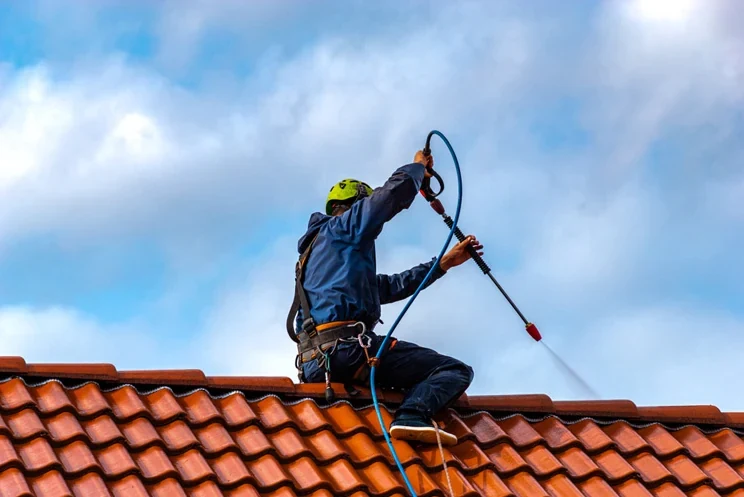
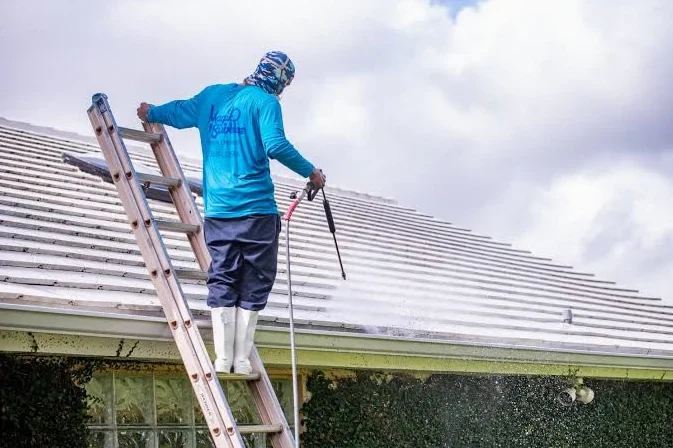
- Soft washing is the method for asphalt shingles, tile, and metal roofs.
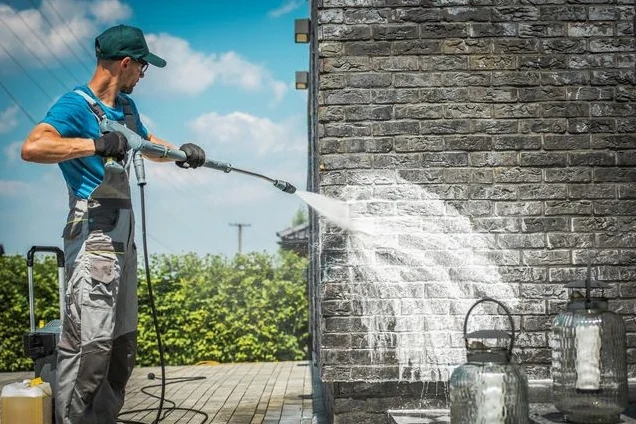
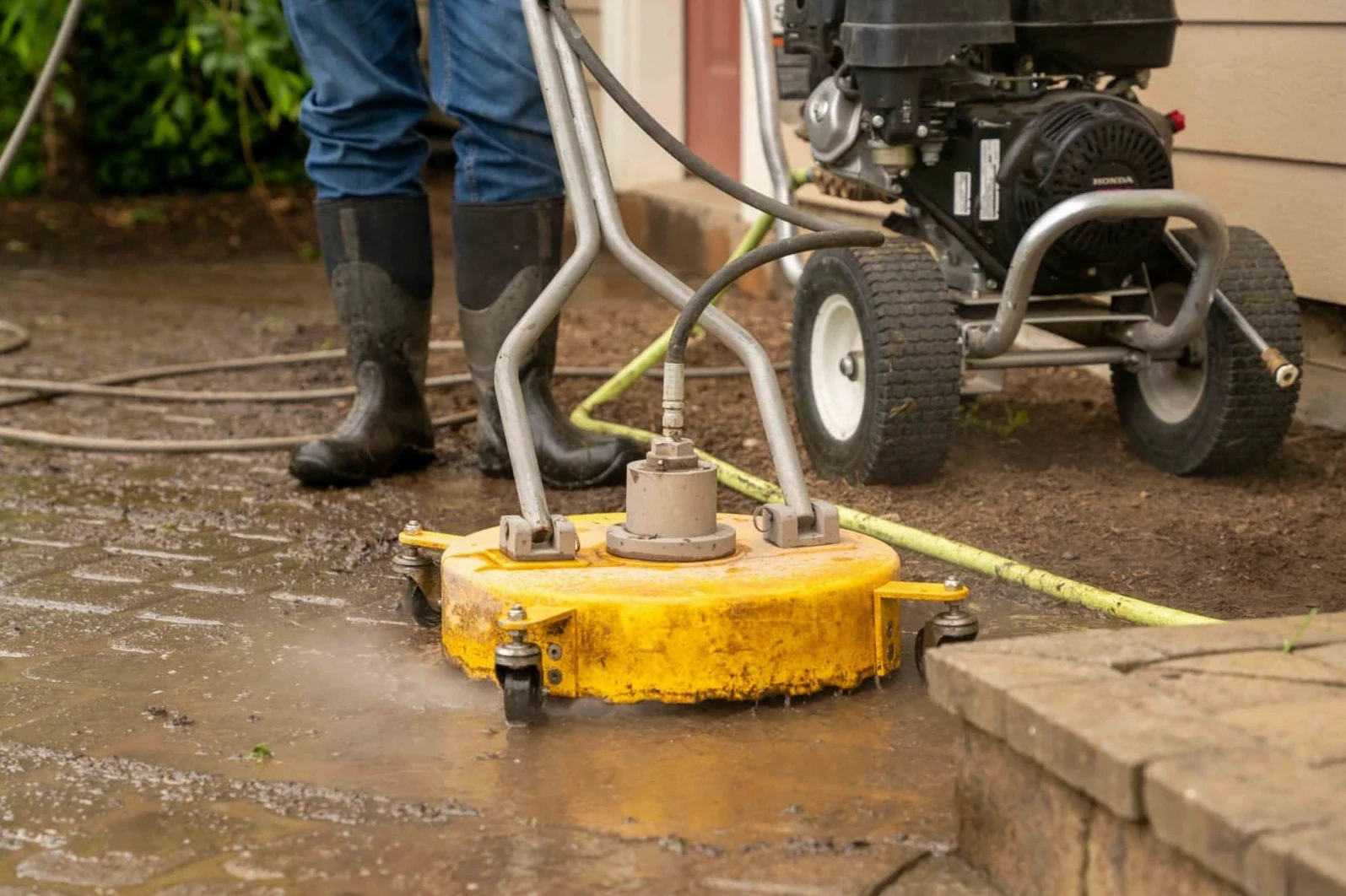
- Pressure washing belongs on concrete, pavers, and brick, not on roofing.
- The cost moves with roof size, pitch, access, growth, and condition, not with a flat rate.
- An on-site look is the only way to give you a firm number.
What actually drives the bill for a roof cleaning
Four things move the price: size, access, condition, and disposal. Size is the square footage of the roof surface, not the footprint of the house, so a steep roof with dormers and valleys has more surface than a simple gable of the same footprint. Access is how a crew gets to the roof and how safely they can move around it. A single-story ranch with open lawn is quick to set up on. A three-story home hemmed in by landscaping, a pool cage, or a narrow side yard takes longer to protect and reach. Condition is how much algae, mold, lichen, or moss is on the roof and whether the shingles are already failing. Disposal is what gets rinsed off and where that water goes. Roof runoff carries the cleaning solution, the dead growth, and loose granules, so it has to be managed rather than left to run into a flower bed or a storm drain.
None of those four has a fixed number attached. A roof that is twice the size of another does not cost twice as much, because setup and access are shared. A roof with heavy lichen takes longer than one with light streaking, because the growth has to be treated and given time to release. A roof with brittle, curling shingles needs a gentler approach and more care around the edges, and that changes the labor. When you ask for a quote, ask how each of those four is being measured on your roof. That is the difference between a number someone guessed from a satellite image and a number based on the actual surface.
Why pressure washing damages shingles
Pressure washing damages shingles because the granules that protect the asphalt are glued to the surface, and a high-pressure stream knocks them loose. Once the granules are gone, the asphalt underneath is exposed to sun and rain, and the shingle ages faster. On tile roofs, pressure can crack or chip the tile and break the seal at the edges. On metal roofs, it can bend panels and strip the finish. Water forced under shingle tabs or tile edges can also reach the underlayment and the deck, which is where leaks start.
Soft washing avoids that. The cleaning solution does the work of killing the growth, and the rinse is gentle enough to carry the dead material off without blasting the surface. The growth you see as black streaks is usually algae, and algae has roots that hold onto the shingle. Killing it and letting the rinse take it away is what removes the stain. Blasting the top off leaves the roots behind, and the streaks come back faster.
How roof material changes the method
Asphalt shingles, tile, and metal roofs all get soft washed, but the solution strength, the dwell time, and the rinse pressure change with the material. Asphalt shingles are the most common roof in Jacksonville, and they take a standard soft wash: apply, let it dwell, rinse. Tile roofs can take a stronger mix because the tile is not porous the way asphalt is, but the edges and the valleys need care so water does not get under the field. Metal roofs need a mix that will not react with the finish, and the rinse has to avoid driving water into the seams and fasteners.
Flat roofs and low-slope sections are a different job again, because water pools and the membrane can be damaged by the wrong method. If your roof has more than one material on it, the crew has to treat each section on its own terms. That is one reason a quote for a roof with a shingle field and a flat addition is not the same as a quote for a simple shingle roof of the same total square footage.
What raises the price and what lowers it
The table below compares the drivers, not dollar figures. There is no honest way to put a number on a roof without seeing it, so the useful comparison is what pushes the price up and what pulls it down.
| Driver | What raises the price | What lowers it |
|---|---|---|
| Size | Large roof surface, multiple planes, dormers, valleys | Small, simple roof with few planes |
| Access | Steep pitch, tall house, tight side yards, landscaping or pool cage in the way | Single story, open lawn, easy setup |
| Condition | Heavy algae, lichen, or moss; brittle or curling shingles; prior damage | Light streaking, sound shingles |
| Disposal | Runoff that needs containment and careful routing away from plants and drains | Runoff that can be managed with simple protection |
Ask how each driver is being handled on your roof. If the answer is vague on access or runoff, the number is probably a guess.
Soft washing is the right call for a roof
Choose soft washing for your roof. Pressure washing is the right method for concrete driveways, paver patios, and brick walls, where the surface is hard and the goal is to blast away dirt and stains. A roof is not that surface. It is a layered assembly of shingles or tiles over underlayment and decking, and it is designed to shed water, not to take a direct high-pressure stream. Soft washing cleans the roof without shortening its life. If someone offers to pressure wash your shingles, the answer is no.
The one exception is a roof that is already at the end of its life. If the shingles are failing and you are planning a replacement, cleaning may not be worth doing at all. In that case, the money is better put toward the new roof. That is a judgment to make with whoever is looking at the roof, and it is worth asking directly before any work is scheduled.
Questions to ask before you book
Ask what method will be used on each part of your roof, what solution strength is planned, and how the runoff will be managed. Ask how the crew will protect plants, gutters, and any outdoor fixtures below the roof line. Ask whether the quote covers the whole roof or only the visible front slope, because the back and the sides often carry the heaviest growth. Ask what happens if the growth does not come off in one visit, since heavy lichen can need a second treatment. Ask for the scope in writing so the square footage, the method, and the runoff plan are all on the same page.
If you want a number for your roof, the next step is an on-site look. Call us at (904) 944-3310 and we can talk through what your roof needs.
Need pressure washing in Jacksonville? Get a free estimate.
+19049449314