What drives the cost of mildew pressure washing
Pressure washing removes mildew from exterior surfaces, and stopping it before it moves inside depends on how far the growth has already reached and whether the surface can be dried out afterward. The bill for the work is driven by four things: the size of the area, how easy it is to reach, the condition of the surface under the growth, and what has to be cleaned up or disposed of afterward. Each one moves the number in a way you can see before anyone starts.
- Short version: Mildew on siding, paint, or concrete is surface growth and washes off. Mildew that has reached drywall, insulation, or the inside face of a wall is a moisture problem, and washing the outside will not fix it.
- Square footage sets the base of the price, because time on the surface is the largest part of the job.
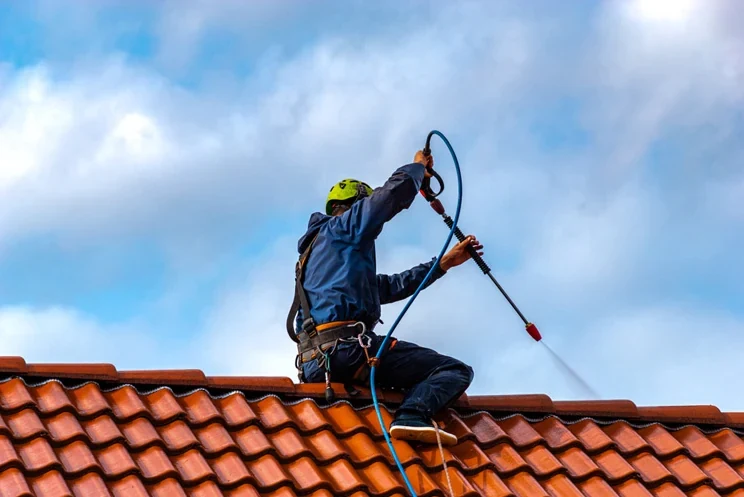
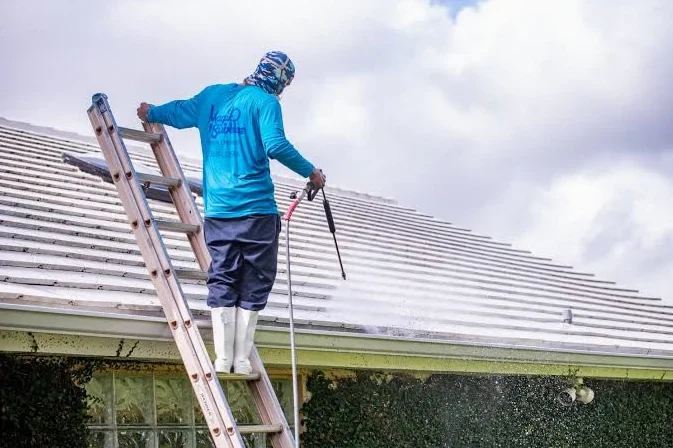
- Access moves it more than size does: a two-story wall over landscaping, a screened pool cage, or a fence line behind a shed takes longer than the same square footage on an open driveway.
- Condition decides the method. Chalky paint, soft wood, and cracked stucco need lower pressure and more dwell time, which costs more than blasting clean concrete.
- Cleanup and disposal add cost when wash water has to be contained or plant beds protected.
None of those four can be priced from a description over the phone with any accuracy. The number needs an on-site look at the surface, because the same wall can be a quick wash or a careful one depending on what is growing on it and what is underneath.
How mildew gets from your siding to your living room
Mildew does not crawl through paint or concrete. It moves inside on moisture and air, which means the growth you see outside is a signal about water somewhere in the wall, not a colony tunneling inward. Mildew needs three things: spores, a food source, and sustained damp. Spores are everywhere in Jacksonville air. Exterior surfaces supply the food, in the form of pollen, dirt, and the oils that collect on siding and paint. The damp is the part you can control.
When exterior growth keeps returning to the same spot, water is getting into that spot and staying. Common paths are a failing caulk line around a window, a gutter that overflows against the wall, sprinkler spray hitting the same panel every morning, and shade that keeps a north wall wet long after the rest of the house has dried. If that water reaches the sheathing or the drywall behind the siding, the growth follows it in. That is the spread that matters, and it is a building envelope problem with a cleaning symptom.
So the honest answer to whether washing stops the spread is conditional. Washing removes the growth and the food layer it was living on, which buys real time. It does not close the gap where water enters. If the entry point stays open, growth returns outside and the interior stays at risk.
What pressure washing does to mildew on each surface
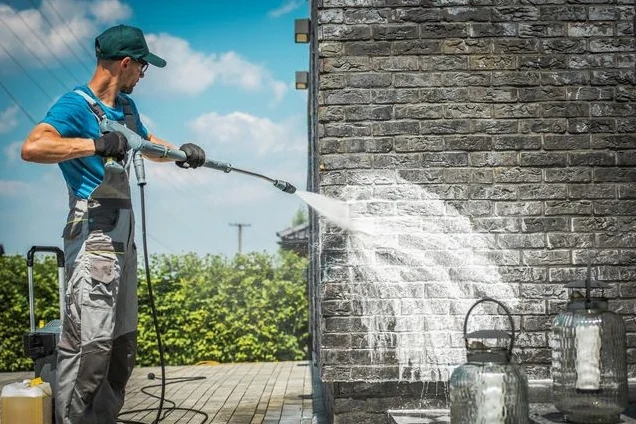
Pressure washing removes mildew from hard, non-porous exterior surfaces: concrete, brick, stucco, vinyl and fiber cement siding, and painted wood in sound condition. The growth sits on the surface along with the dirt and pollen film, and the wash lifts it away. Soft washing, which is low pressure plus a cleaning solution and a dwell period, is the usual method on siding and painted surfaces because it kills the growth at the root instead of driving water into seams.
Porous and damaged materials behave differently. Bare wood that has gone soft, crumbling mortar, peeling paint, and any surface with existing water damage need a gentler approach or they get worse, not better. On those, the wash removes what is on the face, but the material underneath may already hold moisture that feeds new growth.
| Surface | What raises the difficulty | What lowers it |
|---|---|---|
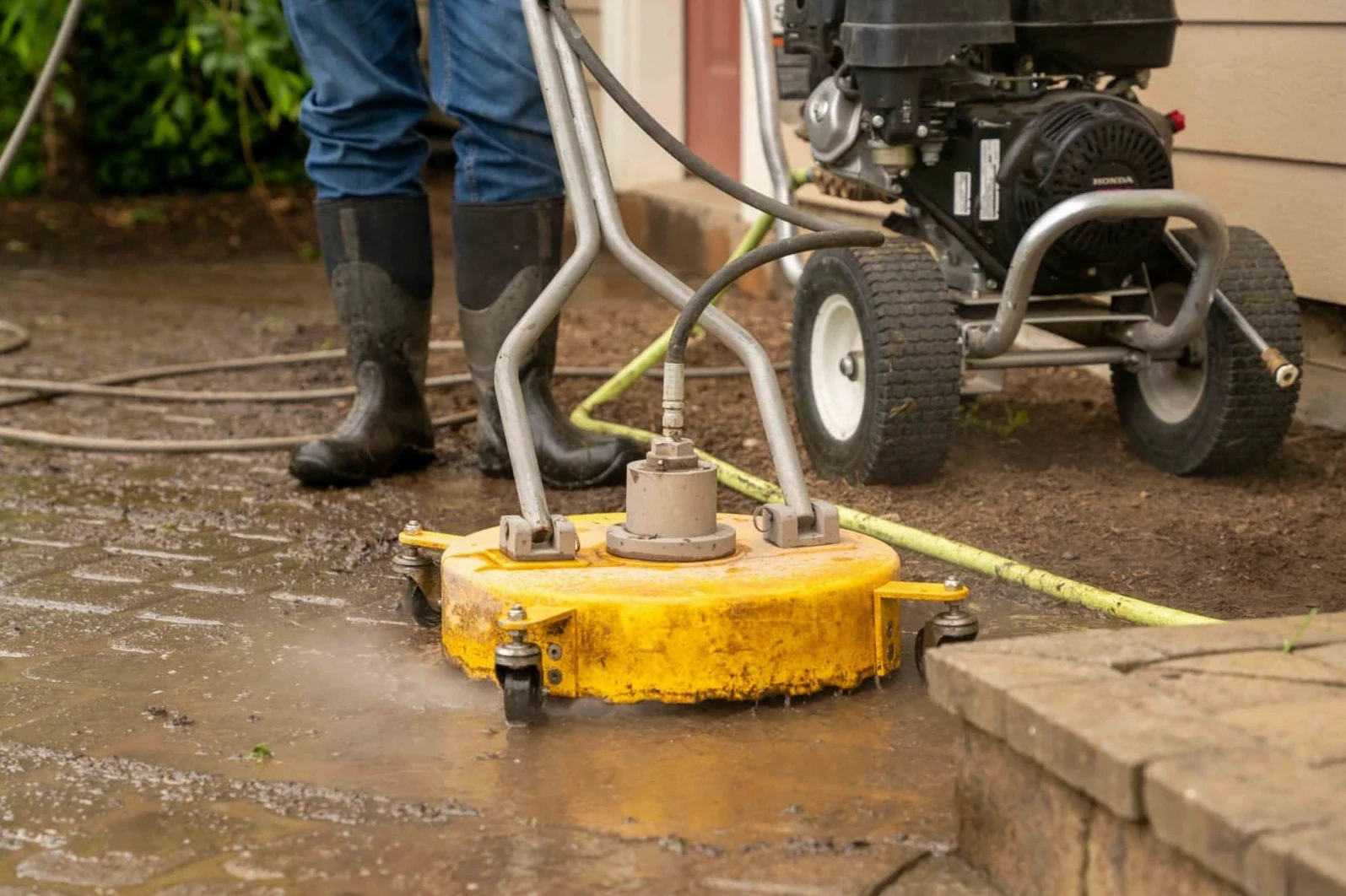
| Concrete driveway or patio | Deep shading, heavy organic staining, drainage that puddles | Open sun, good slope, recent sealing |
| Vinyl or fiber cement siding | Height, landscaping below, growth near window and corner seams | Single story, clear access, sound caulk |
| Painted wood | Peeling or chalky paint, soft boards, growth in joints | Intact paint film, dry wood |
| Stucco | Cracks, prior patching, growth in shaded recesses | Sound finish, no cracking |
| Screen enclosure | Frames, track channels, panels that trap debris | Access to both sides of the screen |
On every one of these, the wash is only half the job. The surface has to dry. Mildew that is washed but left damp in shade, against a wall, or under a leak will come back, and it will come back in the same place.
The step that decides whether it stays gone
Find and fix the water source before or right after the wash, because that is what keeps mildew from returning outside and from reaching interior rooms. Washing a wall that a gutter dumps onto is a repeat job. Washing a wall where a window caulk line has failed leaves the interior path open.
What to check, in order of how often it turns out to be the cause:
- Gutters and downspouts on the shaded side of the house. Overflow against the wall keeps the lower courses wet.
- Irrigation heads aimed at siding, fences, or the base of a wall. Constant spray on one panel is a reliable mildew farm.
- Caulk and sealant around windows, doors, and utility penetrations. A gap the width of a credit card lets water in behind the siding.
- Shade and airflow. A north wall under dense shrubs stays wet for hours after rain, and no wash changes that.
- Any interior sign: a musty smell, a soft spot in drywall, paint bubbling near a window, or dark speckling on a closet wall that backs up to the exterior.
If you find interior signs, the order changes. Have the moisture source evaluated before the exterior wash, because washing the outside of a wall that is already wet inside does not dry it and can add water to the problem. Exterior cleaning is not mold remediation, and it should not be sold as that.
Why Jacksonville surfaces grow mildew so fast
Jacksonville's warm, humid air and long rainy season keep exterior surfaces damp enough for mildew most of the year, so growth returns faster here than in drier climates. Afternoon humidity, frequent rain, and heavy shade from mature landscaping all push the same direction: surfaces stay wet longer, and the food layer of pollen and dirt rebuilds quickly.
That has two practical effects. The first is timing. Cleaning in a stretch of dry weather, and giving the surface time to dry afterward, does more for the result than any single method choice. The second is frequency. A wall that was clean two years ago can be green again, not because the wash failed but because the conditions never stopped. Regular exterior washing, plus keeping gutters clear and shrubs trimmed back from the siding, holds the line better than one heavy cleaning followed by years of nothing.
It also means the answer to whether washing stops interior spread is time-limited. The wash resets the exterior. Keeping it reset is the maintenance question, and it depends on water management, not on how hard the surface was blasted.
What to ask before the wash starts
Ask three things before any work begins: what method will be used on each surface, how the water source will be handled, and what the price includes. The method matters because high pressure on the wrong surface causes damage that costs more to fix than the wash did. The water source matters because it decides whether the job holds. The scope matters because wash water containment, plant protection, and screen enclosure tracks are often priced separately, and you should know which side of the line each falls on.
Also ask what the surface should look like when it dries, not when it is wet. Some staining on concrete and some discoloration on older paint will not lift completely, and knowing that in advance is better than discovering it afterward. If growth returns to the same spot within a season, that is information about water, not about the wash, and it is worth a second look at the roof edge, the gutters, and the grade around the foundation.
If you have interior signs already, say so when you call. It changes what the exterior work should be, and sometimes it means the moisture problem gets looked at first.
Need pressure washing in Jacksonville? Get a free estimate.
+19049449314